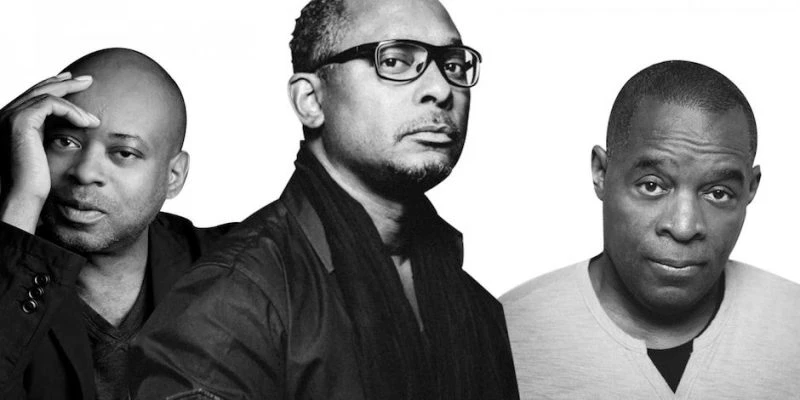
The story of techno begins not in a glamorous club, but in the economically strained, post-industrial landscape of mid-1980s Detroit, Michigan. Facing social challenges and economic decay, a revolutionary sound was engineered by three visionary African American musicians—Juan Atkins, Derrick May, and Kevin Saunderson—collectively known as The Belleville Three.
Techno was a direct response to this environment. The pioneers aimed to create a "new futuristic soundscape," synthesizing the soulful dynamics of funk and soul with the cold, mechanical efficiency of European electronic pioneers like Kraftwerk. Juan Atkins, "The Initiator," May, "The Innovator," and Saunderson, "The Elevator" , utilized instruments like the Roland TR-808 and TR-909 drum machines to craft a minimalist, repetitive 4/4 beat that ran between 120 and 150 bpm.
This music was profoundly resonant, offering Detroit’s African American youth a form of self-expression and a message of "reinvention, and the possibility of new futures". The techno dance floor, much like the preceding disco culture, was intended as a unifying sanctuary where identity politics dissolved: a place where "everyone may feel at home" regardless of background. Although the genre flourished globally, leading to various subgenres , the philosophical and sonic foundations remain firmly anchored in Detroit, a powerful reminder of how creativity can transform industrial bleakness into a revolutionary cultural movement.